
This morning on my walk, I saw my first hares of the season. Two in a field chasing each other, then the sudden boxing that’s often part of their mating ritual, then sprinting off and circling back as if the whole world were alive with urgency and delight. I watched from a respectful distance. A peak experience in miniature.
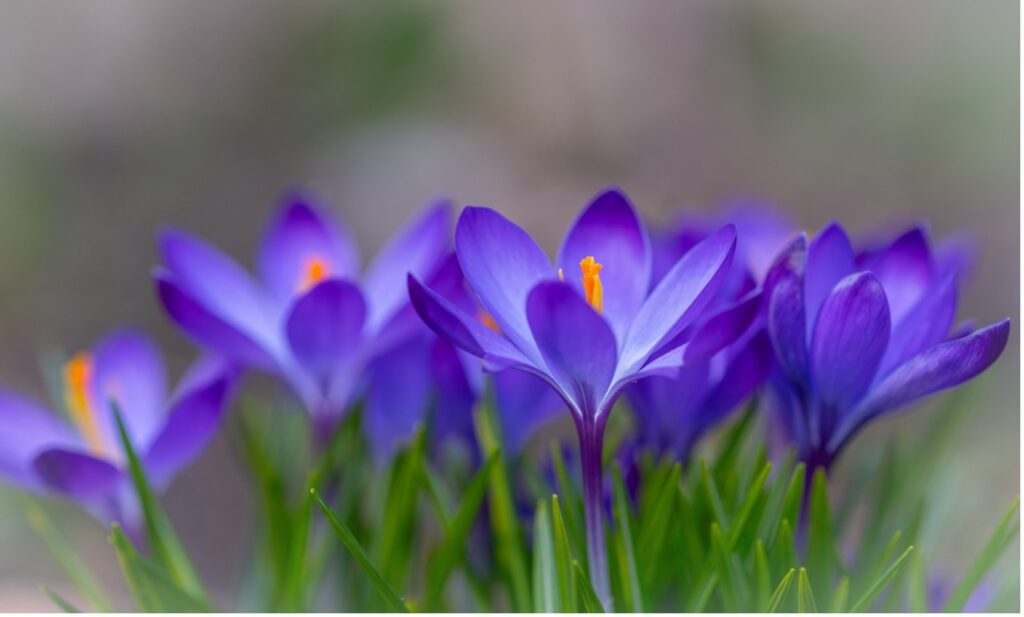
On my way back I noticed the crocuses beginning to gather under the trees. Daffodils are pushing through too, one by one. After a long winter, and a season that has held some difficult moments, there was a quiet sense of life stirring again. The woods felt as though they were welcoming me back. I could feel something in me responding.
I’ve been thinking about how naturally our attention moves toward what is hard, what needs fixing or what feels overwhelming. As sensitive people, we know how quickly our systems register strain.
But alongside that truth, there is another one. The same nervous system that notices what is wrong also notices what is beautiful. The same depth that feels heaviness can feel warmth, kindness, meaning and connection just as deeply.
There’s a term for this in the HSP research. It’s called vantage sensitivity. It refers to the fact that some people benefit disproportionately from positive, supportive experiences and environments.
Joy available in the smallest places. In nature, which keeps offering itself without needing to perform. In the alchemy that happens when two people meet in safety. In a single moment where the body realises there is nothing to solve right now.
Perhaps sensitivity is as much about receiving goodness as it is about coping with intensity.
That’s what I want to explore with you in this article.
Understanding vantage sensitivity
You’re likely already aware that highly sensitive people are affected quickly by harsh or stressful environments.
But vantage sensitivity adds something hopeful. It focuses specifically on responsiveness to positive conditions. It suggests that highly sensitive people register supportive experiences more deeply and benefit more from them, even when the shift is small.
In other words, highly sensitive people gain more from the good. Vantage sensitivity is the name for that greater upside.T
his is grounded in research within developmental psychology and environmental sensitivity.
Here’s the evidence behind it, if you’d like to read more
Try this: A 7 Day Micro Joy Experiment

So how do we actually practice opening to goodness? Here’s something simple to try.
With everything feeling so heavy right now, joy can seem like it’s moved out of reach. The more we think it needs to be this big, transformative thing, the further it gets. But when we let it be small? It turns out it was right here all along.
Here’s something you might want to try — a gentle 7-day practice of noticing tiny joys and actually letting yourself feel them.
Each day, pick one small thing. It might only take a few minutes:
- Step outside and feel the air on your face
- Hold a warm mug in both hands
- Notice birdsong (when did you last actually stop and listen?)
- Light a candle at dusk and watch the flame for a moment
- Put on a song you love
- Send someone a message that’s genuinely thoughtful
- Look up at the sky — just pause and look
When it happens, see if you can slow down enough to actually feel it. Let it register and matter.
If you want, keep a little notebook to collect your micro joys.
As you move through the 7 day micro joys experiment, you might begin to notice patterns: what reliably softens you, what replenishes you, and what helps your nervous system remember that goodness is real, even in small doses.
And with that in mind, here is an invitation.
An invitation to reflect
- What’s one small thing that actually helps when I’m exhausted?
- Where (or with who) do I feel most like myself?
- What tiny moment this week made me feel a bit better, even if I barely noticed it at the time?